Transportation in Europe: A Complete Guide
One of the biggest concerns for first-time visitors to Europe is transportation. Fortunately, Europe has one of the most extensive Public Transport Networks in the world. Whether you are traveling between countries on a high-speed train, taking the metro across a city, riding a regional train to a nearby town, or renting a car to explore the countryside, there is usually a transportation option that fits your budget and comfort level. Understanding the strengths and limitations of each option will help you choose the right transportation for your trip.
There are so many different train systems in Europe - which ones do you take?
Trains in Europe seem like a mixture of alphabet soup and meaningless synonyms. The easiest way to sort it out is to view each train system based on the area it serves:
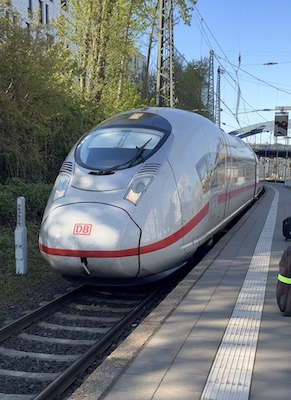
- InterCity trains are long-haul trains that go from one metropolitan area to another – think of it like Chicago to New York. These trains are often nationally run trains owned and operated by a country, but are not restricted to travel within their given country. Examples are DB (Deutsche Bahn) for Germany, Trenitalia for Italy, and SNCF for France which operates TGV INOUI, sometimes referred to as TGV, and OUIGO.
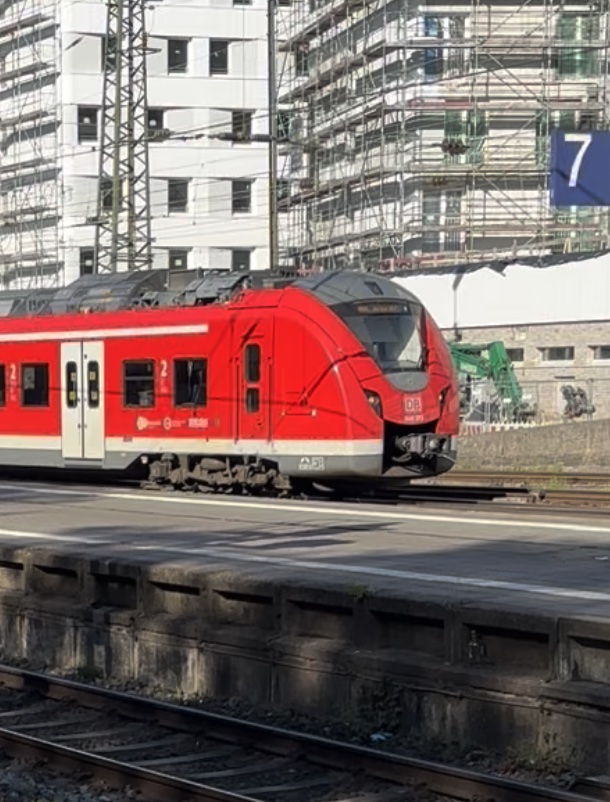
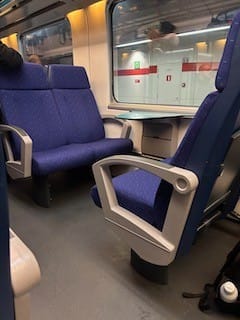
- Regional trains generally have shorter runs and serve the greater metropolitan area. They may also make longer trips to cities that are not served by the national trains. Depending on how far they travel, streetcars may or may not fit into this category. Think of this as being similar to the commuter trains serving New York city from Connecticut and Long Island. Examples of these are TER (Transport Express Régional) in France and Great Western Railway (GWR) in the UK.
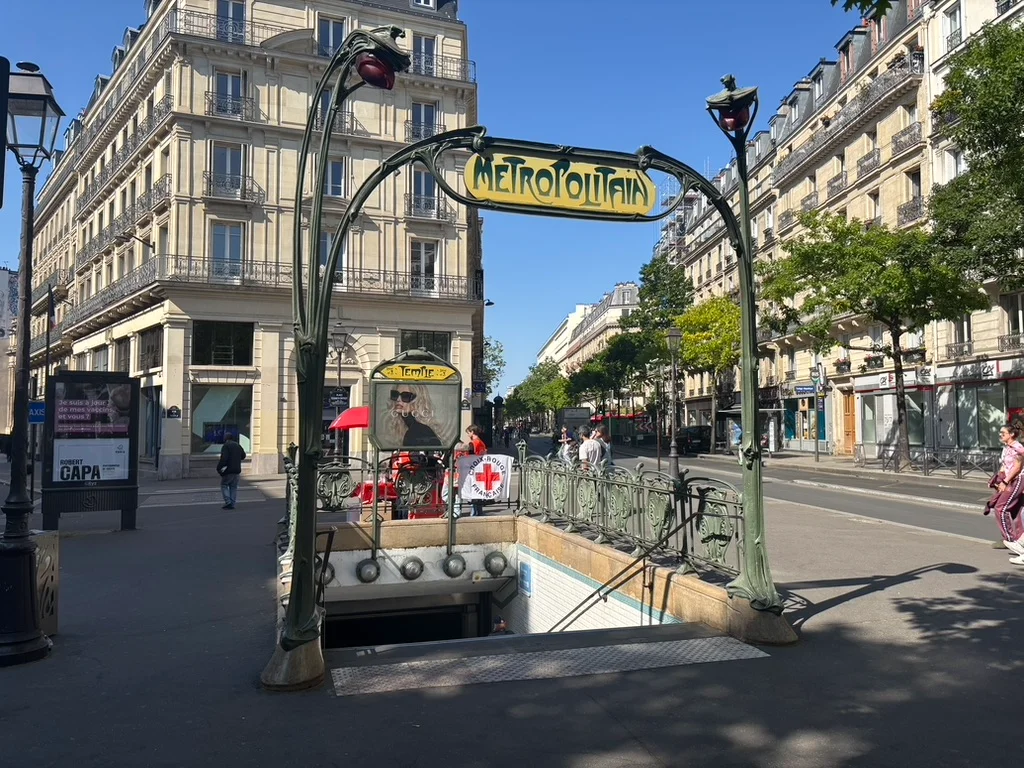
- The last category of trains generally operates within the city area. Examples are the Metro in Paris, the Underground in London, U-bahn in Frankfurt. These are similar to the subway system in New York.
Using the Metro in Europe
Why is the Metro so important for you? The metro is usually the fastest way to travel around large European cities. Unlike taxis, the metro is not affected by traffic congestion and often connects directly to major tourist sites, train stations, and airports.
Before you jump into purchasing tickets you need to be aware of how tickets are used on systems like the Metro. In general, everyone needs a ticket. Small children probably don’t need a separate ticket. However depending on the system you are using, starting around 4-11 years old they will need their own ticket. Check online for the requirements for the local train system you will be using.
Because each passenger requires their own ticket, you cannot purchase two tickets on the same credit card and then have two people access the train system unless they are paper tickets. One credit card, one person, one e-ticket. The reason for this is that if they allowed multiple people to get on the train purchased by a single credit card and the owner of the credit card leaves the train early then the remaining passengers cannot provide a ticket if stopped by an inspector.
Hopefully you will utilize systems that allow you to use a credit card or smartphone at the turnstile and bypass the ticket purchasing process completely. Credit cards with a chip and phones that allow tap-and-pay are very convenient. Utilizing tap-and-pay requires each passenger to have the ability to tap their own device at turnstile.
Rather than trying to explain each ticket machine you may encounter in detail, we will outline the process all ticket machines follow. By doing so, you will be equipped to handle the slight variations you may run into.
- Most ticket machines utilize touch screens that may need to be woken up by touching the screen.
- Now you should be able to select a language that you want the menu system to utilize. Many times this comes in the form of country flags. For english look for the UK flag. If there isn’t a language choice you can probably still figure it out. Go to the next step.
- Some systems require that you have a “train card” which the ticket machine can access and add tickets to. This train card is then used to enter the gate leading to the platform.
- At this point you will either enter the number of tickets you want or you will select the desired train by either picking your destination from a list or by selecting the name of the train (which is often the final stop of the run).
- You may be asked if you want a one-way trip or a round-trip
- If the machine allows varied ticket delivery methods (printing, e-ticket, etc.) you may be asked how you want to receive them.
- The final step is payment. Cash and credit card and sometimes your phone can be used.
Regional Trains in Europe
- Generally serve the greater metropolitan area beyond the Metro system.
- Often used by commuters
- Usually different ticket machines and apps
- Tickets may be used differently than Metro (tap on/tap off for instance)
Intercity and High-Speed Trains in Europe
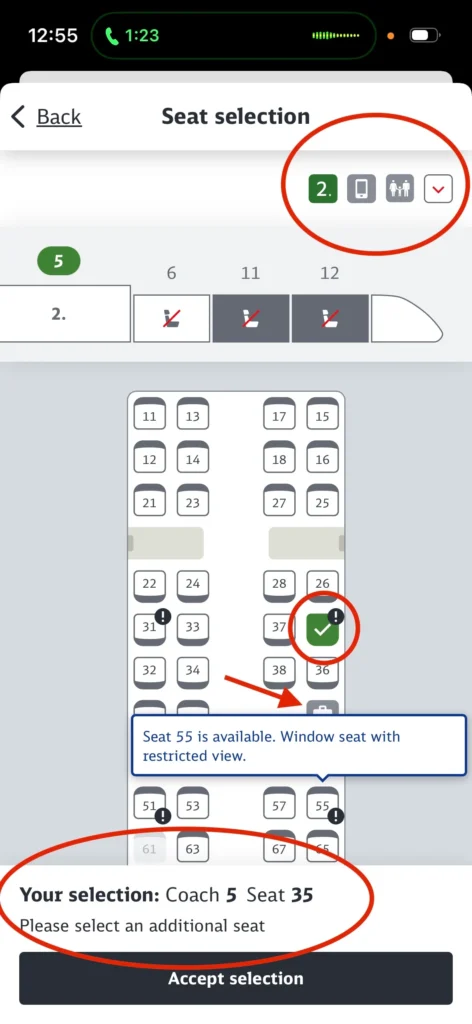
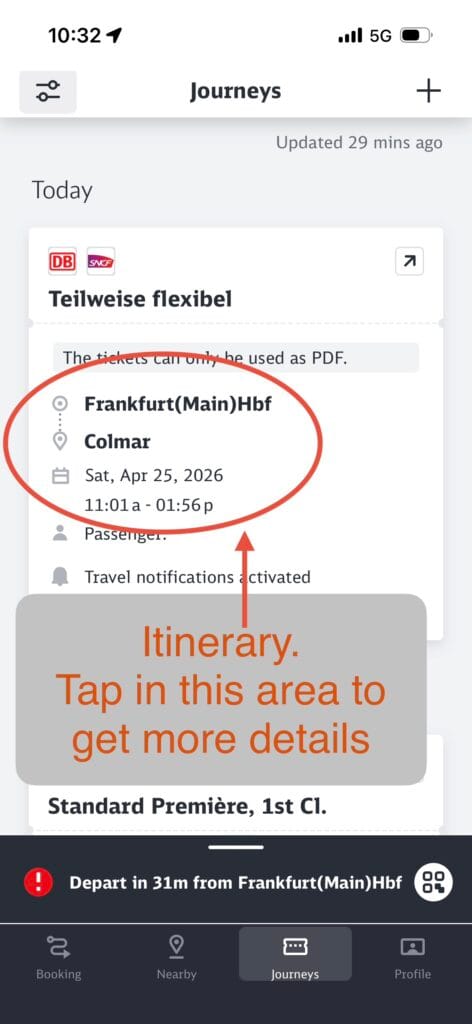
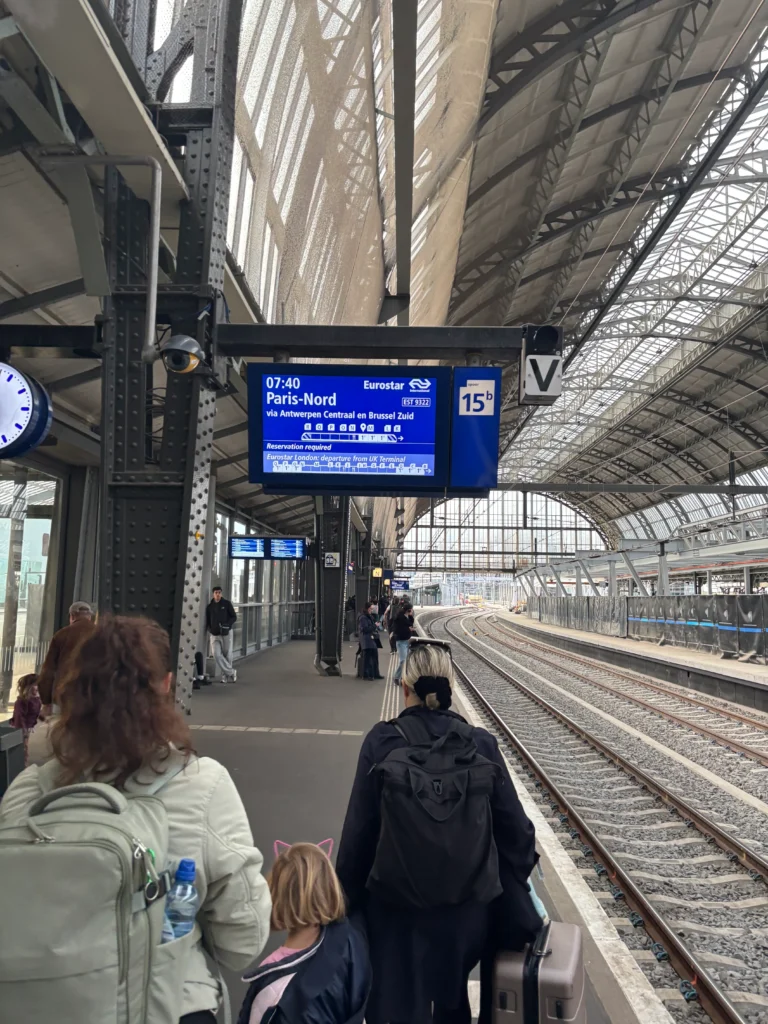
InterCity trains are high-speed trains that transit between larger metropolitan areas. Our 4 part series walks you through the full process:
Riding Buses in Europe
Can you really ride the bus? It’s been a long time…
The three main problems with riding the bus: which bus to take, where does it go and where to I meet it have been solved by the internet. Your GPS navigation app will tell you where to get on the bus, which bus number to take, and when to get off.
The only real problem that still exists is how to get a ticket.
So, yes you can easily take the bus. If you’ve ridden buses recently in North America then you are probably well versed in how to ride the buses in Europe. They are very similar.
Note, that although the bus shelters in Europe look very familiar, not all bus stops have them. In areas where you don’t speak the language and are unfamiliar with the place names there will be a lot of signage on the street that won’t make any sense and therefore it can be difficult to find the pole that indicates the bus stop.
As you travel throughout the city, keep an eye out for bus stop signs or do an internet search for a picture of the local bus stop signs before you go. Having an idea of what you are looking for can make it much easier.
Buses that accept credit cards or payment by your phone are very easy to ride. As opposed to the Metro system, one credit card can purchase multiple tickets on buses. It is common for buses to require that the rider both check-in with their ticket and check-out, particularly on systems that determine the ticket price based on the length of the journey. As you board the bus with your credit card in hand tell the driver which bus stop you want to get off at and the driver will do the rest.
Often, bus lines headed in both directions on a given street will locate the stops across from one another. When using the bus system in the UK and you have a general idea of the direction you need to go, make sure you allow for the fact that the UK drives on the left hand side of the road – not the right. This means that your bus stop is on the opposite side of the road than expected.
Purchasing tickets for the bus is the biggest issue rider currently face. They can generally be purchased via an app, vending machines or from the driver. Some drivers only accept cash – no credit cards or tap-to-pay methodology, and some do not accept cash and take only tap-to-pay, and some drivers do not sell tickets at all. The only way to know is to search the internet for how to purchase tickets for the bus line you are interested in.
A little pre-planning might be useful by researching the bus lines you might be taking on your vacation to find out how to buy tickets. If they require an app, download it and sign up at home in a relaxed environment rather than trying to do it on the fly as the bus approaches. One caveat is that some buses, as well as some trains, will not accept your credit card or perhaps credentials until you are in the country. This is a security mechanism intended to reduce fraud.
Taxis and Ride-Sharing Services
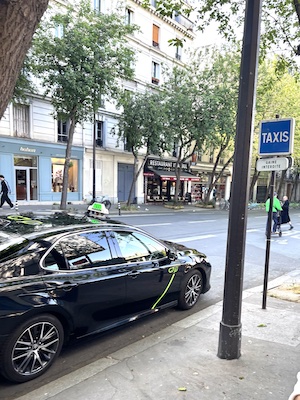
Taxis are available for getting around larger towns, however they may be hard to find at times. If you are out in a more rural area, away from the larger cities there may not be any taxi service available. Make sure you have the phone number of the taxi service with you when it drops you off so that if the internet is poor you can still call them to pick you up. We experienced this exact situation of no internet and limited cellular connection while traveling in the Colmar region of France. We had to make our way to a spot where we could get a strong enough connection to phone for a taxi.
🧳 Don’t be Surprised
Be careful when venturing into areas where there is limited cellular service, mountainous regions for example, because you may not be able to call for a taxi to bring you back.
There are some ride sharing apps that operate in Europe. Check which ones work in the area you will be in. Not all of the ones that operate in North America are prevalent in Europe.
One last thought on the availability of taxis and rideshare drivers. Some holidays and certain times of the day you may experience limited service. We were stuck at Stonehenge once the little towns in the are were not big enough to have a taxi and all of the rideshare drivers were engaged taking kids to school.
Renting a Car in Europe
🧳 Don’t be Surprised
Traffic circles, sometimes referred to as roundabouts, are common in Europe. Make sure you are able to navigate them successfully.
Renting a car is similar to renting one in North America, however do not underestimate the traffic and parking issues you will face. Our recommendation is to only consider renting a car if you are traveling outside of the urban areas. Public transit is easy to use and readily available.
If you decide to rent a car make sure you get one with an automatic transmission if you are unable to drive a car with a clutch. Manual shift rentals are common in Europe. Also, it is common for European rental cars to not have a spare tire or jack. Some cars will have a tire repair kit consisting of puncture sealant and a device to inflate the tire. Make sure you have the phone number and the ability to call for roadside assistance if you need it.
Do not underestimate the weather. Depending on where you are and the time of the year, heavy rain or snow is common. Sudden changes may catch you off guard.
If renting a car be sure to obtain additional insurance as your North American insurance most likely does not cover you including any insurance normally provided by your credit card. You will need an international driving permit. Also, carry your passport for identification. Alert the rental car company for each country you expect to drive the car (note there probably is a fee for crossing each country border). Expect a high drop-off fee if you plan on a one-way rental.
Do not underestimate the risks involved in driving in an unfamiliar country with signs in a language other than english as well as country specific symbols used to warn of approaching dangers. For a sampling of the complexity see the links below. Keep in mind that you will encounter these signs while traveling at speed and need to be able to react to them correctly and timely for your safety and the safety of others.
Many traffic signs rely on the color red indicating a specific action vs. black. If you have red/green blindness this may be an issue.
Do we need to mention that the UK drives on the opposite side of the road?
Choosing the Best Transportation Option
The best transportation option is the one that gets you where you want to go and you are comfortable enough to utilize it. Most of the resistance to public transportation is related to uncertainty rather than complexity or difficulty. The recent strides in technology has made riding public transportation much, much easier. We have found that it is best to just dive in and give it a try. If you get stuck someone around you will offer a bit of help to get you going again. You’re on vacation. Have a bit of fun. Take a chance. Do something different. Ride public transportation.
Is it better to fly or take the train when traveling long distances within Europe? There are a lot of cheap flights available within the European Continent. The real issue is how much time the train takes vs. flying. For example, the train from Berlin to Paris takes roughly 8 hours non stop. Add an hour to get to the train station and then 30 minutes to get to your hotel. Compare the 9 1/2 hours by train to an hour to get to the airport plus arriving 90 minutes in advance (assuming no checked luggage), a 2 hour flight, and one hour for travel to your hotel. That is 5 1/2 hours. Unless there is a significant cost difference, flying makes the most sense. However London to Paris is about the same: 4 1/2 by plane vs. 4 hours by train. One other consideration is how relaxing is it on the train vs. flying?
Be aware that non-American airlines have different size restrictions for carry-on luggage. While you may not be affected by this flying from the US to Europe, you might be forced to check your bags when flying intra-Europe or on the return flight back to the US.
Return to Prior Page