Your Source for TIPS, TRICKS, and HACKS for European Travel
Navigating the station itself! Concerns over luggage, kids, mobility issues. Are there elevators or escalators?
How to buy tickets. What to know about the Metro system, U-bahn and street cars!
Tickets: check in? check out? Both?
InterCity Trains Buying Tickets; where to board; reading platform signs. What to expect onboard. Things to consider when selecting a seat
How do I pay for tickets and can I buy them on the train?
Do I really need an app for every train system??
What are all of these different trains and which one do I take?
What if I don’t speak the local language?
The one word you need to be able to read in the local language.
Is the BUS a viable option? How about RENTAL CARS? Taxis and Ride-Share
Tips on picking the right place to stay
Coffee in the morning? What you should be aware of.
How to STRATEGICALLY locate your hotel
What amenities should you look for?
What to expect your hotel room to be like?
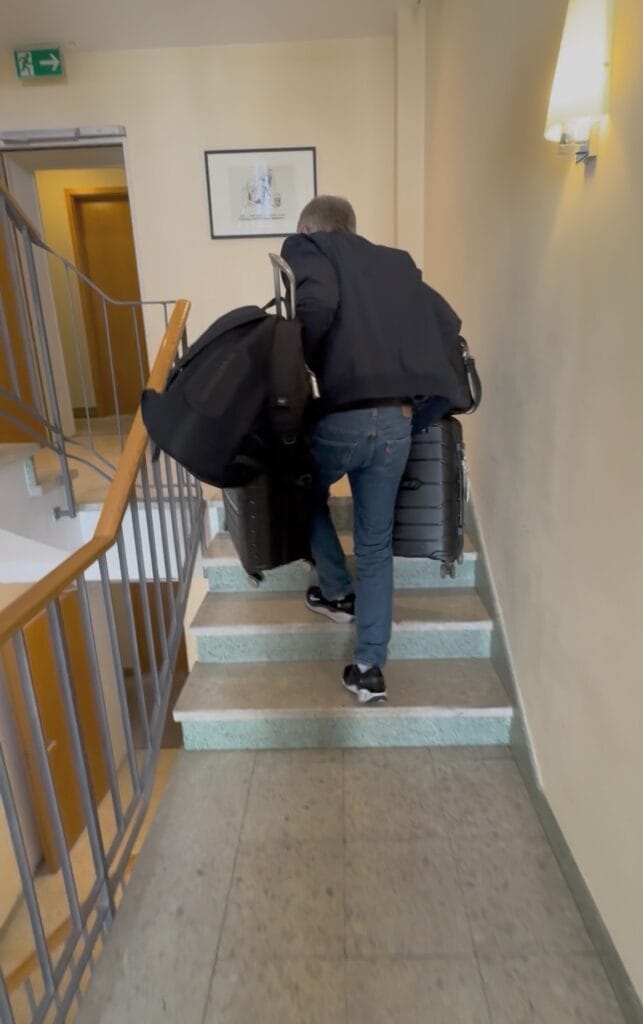
Kids, mobility issues, lots of luggage and no elevator…
Hotel Safety
Medical , Police and other EMERGENCIES
STOP: If you only read one thing on this website make it the following: HOW TO CALL EMERGENCY SERVICES
How to see a Doctor — based on our own visits to urgent care in Germany and in France
Will I encounter language issues? What about the cost? How long will it take to see a doctor?
Pharmacies are different than you are used to. How to get what you need and the information you need to find BEFORE you go
Do you have medical coverage? Does that include Medicare?
How do you find English speaking doctors, dentists or lawyers?
Pharmacies are different than you are used to. How to get what you need and the information you need to find BEFORE you go
What to do if you are arrested? Will the Embassy help you?
Additional European Travel Topics
How to find a restroom!!
What you need to know before you go!
Restrooms in tourist areas can be difficult to find.
Some stations have restrooms but usually only the larger ones and accessibility may be limited
I have to PAY to use the restroom? HOW and how much?
What are restrooms called?
What ways are there of locating a restroom and then how to get there?
Should I sign up for tours
Is a Eurail pass a good idea?
Where should I go? What should I see?
Older Adults
Don't become roadkill -- I was surprised by this.
How do I find a good place to eat?
Oh no! I lost my travel partner
Why would I need a printer?
On the way home, when do I go through customs?
Grocery Stores - Things may be different -- Even bottled water??
What apps should I have?
I'm bored where I am. Now what?
Can I really take a bus? Its been a long time...
TRAVEL SAFETY!!
Do I need WIFI access, cellular access or both?
E Tickets, Paper tickets, tickets in apps, trains to catch -- is there a way to keep track of it all?
How to find a Restroom
Public restrooms can be difficult to find.
There are Apps that may help guide you to one nearby, however having tested two of the more popular apps in Europe, as of spring of 2026, our opinion of these apps is that they are not quite up to the task yet. Several times we were standing in front of a public restroom or a train station that had a restroom and neither app listed them. As these apps gain popularity their data will improve. Our recommendation is to have a couple of these apps on your phone. One of them might show a restroom in you vicinity. When you need to go this can be a life saver. Also, we suggest searching for “Public toilet near me” on your gps app.
Many of the chain restaurants found in North America that you would expect to have a restroom available will also have one in Europe. Local restaurants, train stations, department stores may also have one. Expect to either purchase something or pay to use it.
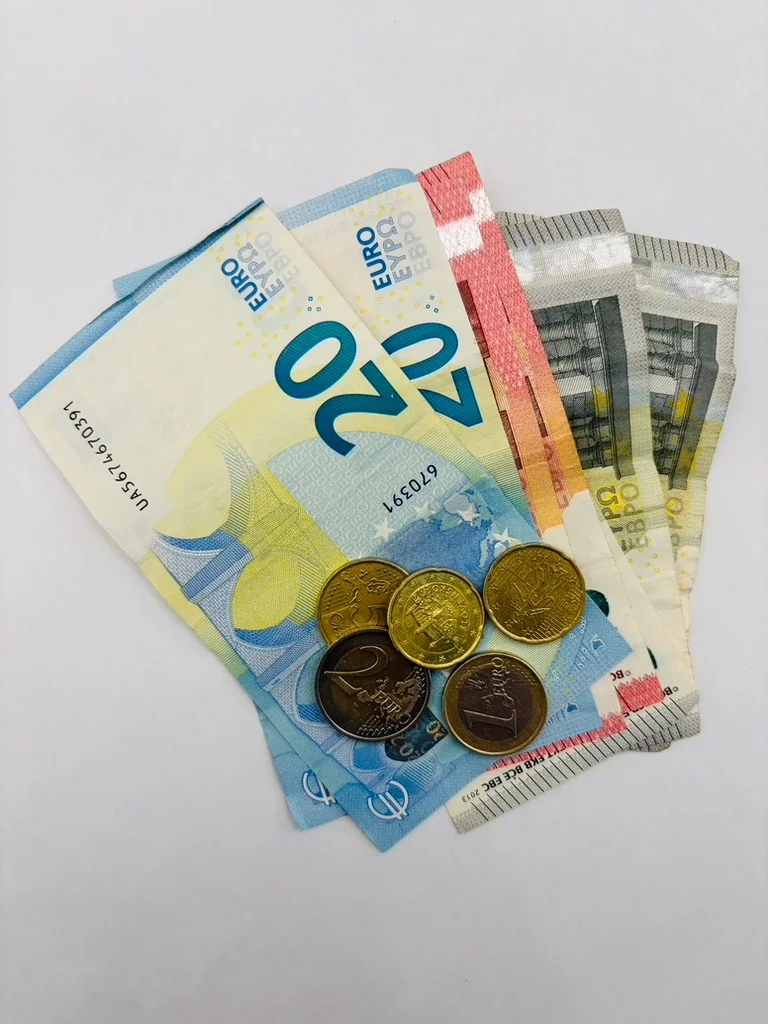
Although it has improved since Covid, there are still toilets that require cash (some without an attendant utilize turnstiles and require coins). The cost ranges from .20P to 1 pound in the UK and .50 cents to 2 Euros on the continent. Many take credit cards. They also provide change, however it may return only coins.
How do I get plugged in -- using European Electricity
Do I need an adapter or converter to use my electric items?
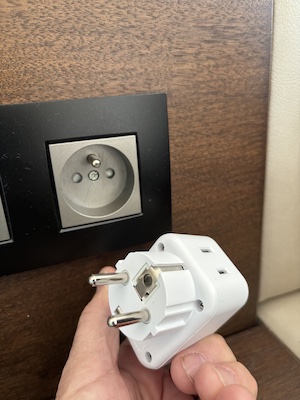
Two issues determine whether you need adaptors and/or converters. Electricity in Europe is 240 volts compared to 120 volts in the US, and electric plugs are not standard across all countries in Europe.
TIP: If uncertain ask the attendant at your lodging for help. Do not risk electric shock or fire.
An adapter allows the standard North American plug to engage a specific plug type in a given country. In other words, you may need an adapter for every country you plan to visit if they have different shape plug-ins. Also, check the devices you want to use to see if they have a 3 pronged plug. Many adaptors only support 2 prongs. Finally, if your device operates on 120 volts only then you will need a converter in addition to an adapter. CAUTION: Adapters pass through what ever voltage the host country provides. If your adapter connects to the local power and allows an American style plug to attach to it your device will receive 240 volts NOT 120. You must include a converter.
Converters switch the electricity from 240 volt to 120 volt. Most of the computer based items that people carry will automatically convert from 240 to 120 volts and therefore only need an adapter. Some items, such as hairdryers or razors, only operate at 120 volts. These need both a converter and an adapter.
To know for sure, check the label on the plug or the items documentation. If it says something like: 100-240V, 110-240V, 120-240V then only an adapter is needed. If it only says 120V, 110V, or it doesn’t say anything at all (or if you are uncertain in general) then use an adapter along with a converter.
If you decide you need a converter then you must determine how much power you need to convert. Most likely the only item you will have that needs a converter is a hair dryer. Most hair dryers consume between 1000 watts and 2500 watts. Check your equipment and/or documentation to determine how much power it consumes and the purchase a converter that will handle that size of load. If your item does not indicate watts then it should list the amps used. If this is the case then a small bit of math is required to convert to watts: multiply the amps times the volts to get the watts. For example, if your hair dryer indicates 15A then the calculation would be: 15 x 120 = 1,800 watts. A converter that provides more wattage then 1800 will work, however do not use one that provides less.
TIP: Buy an adapter that has a USB connection so that you can use the same adapter for both your phone and another device like your converter.
How to call to and from Europe and calling within Europe
How do I call Europe, make a local call while in Europe, or call back to the US from Europe?
The following applies only to using your cell phone. There are several great websites that explain making landline calls if needed. Making international call is a bit confusing sometimes due to the differing number formats used. Whereas in North America the format is identical (7 digit plus an area code), Europe numbers can vary in length country to country and whether it is a cell phone or a land line phone number. For the most part however, when using your cell phone to call Europe, make a local call while in Europe, or calling home from Europe can be summarized by the following: hold down the zero button on your phone until it switches to a plus sign (+). Drop the leading zero if the number you are calling has one. Dial the rest of the number (ignoring how many digits are involved).
TIP: Calling from Europe to North America requires plus sign (+) followed by 1 and the area code and the number: +1-(area code)-XXX-XXXX. Check your contacts to make sure the phone numbers include the “+” and the “1” along with the number. If not, your contacts phone numbers will not work. The only option is to manually dial the full number.
TIP: Roaming charges can get very expensive quite quickly, so avoid then if possible by either having an International calling plan or using a wifi calling app
If you want a brief explanation of what this all about read further, otherwise skip this part: First, be aware that every call you make when using a cell phone operated by a North American carrier in Europe will be an International call , thus requiring the use of the exit code for the country you are in when you make the call (the exit code is the portion of the number you are dialing which indicates you want to make an international call) followed by the country code for the country you are calling. While in North America the exit code is 011 which would then be followed by the country code – dialing France for instance would be 01133 then the actual phone number dropping any leading zeros. While in France the exit code is 00 etc. (an internet search for country codes will get you a list if desired).
Pressing and holding the zero button, which switches to a plus sign (+) automatically determines which country you are in and populates your call with the right exit code.
Now the real confusion starts. This is because some of the countries in Europe distinguish between calling a landline vs calling a cellphone by adding a “1” in front of the number to indicate to the phone system that it is calling a cell phone. In addition a leading zero may be added to the number which is useful only to the local residents. The best way to deal with this is to drop any leading zero and just dial how ever many digits make up the phone number.
One other point of confusion is the difference between 011 and 001 and 1. 011 is used while in the US to make an international call, sometimes referred to as the exit code. When outside the US, 001 is the exit code (00) plus the North American country code (1) used to call North America from in international location, and the 1 by itself is also the country code for North America when used with the plus sign (+) with the cell phone automatically determining that a 00 is needed on the front of the number
Do I need Euros or Pounds? What to know about credit cards.
Do I need Euros or Pounds – or just a credit card?
In the larger cities, credit cards are widely excepted. You may not need any of the local currency. However in smaller, rural towns the local shops may only take cash. Also, the availability of places to exchange currency has dropped significantly in the past few years to the point that it may be difficult to find a place. Unless you are exchanging a lot of currency don’t waste time trying to shop around for a better rate, just take advantage of the first convenient place you come across.
TIP: Although it has improved since Covid, there are still toilets that require cash (some without an attendant utilize turnstiles and require coins). The cost ranges from .20P to 1 pound in the UK and .50 cents to 2 Euros on the continent.
TIP: if you want to save time or the hassle of money exchanging while traveling, contact your local bank at home to see if they can provide Euros/Pounds before you leave. Unless you use buses that require cash payments for tickets 20 Euros will probably suffice and should be available from your bank.
TIP: Need some change to carry for the restrooms? Check the Hotel Section for a list of items to purchase from a grocery store
TIP: If you want to donate to a church or cathedral that you visit you may need cash for the smaller ones. Larger churches have electronic means for collecting donations
TIP: While many buses allow ticket purchases via contactless means, not all buses do. Some cash to purchase bus tickets from the driver may be useful especially if you don’t have time to download an app to make the purchase.
TIP: Not all countries in Europe use the Euro as their main currency. They will probably accept payment in Euros however the exchange rate will not be favorable. Denmark, Switzerland, Czechia, Hungary, Poland, Bulgaria, Romania, Sweden and the UK have their own currency.
Using a credit card
You may need a PIN to use a credit card internationally. Some transactions involving credit cards will require a PIN. Although you may be able to enjoy your entire vacation without needing a PIN, making purchases from gas stations, some ticket machines, and in some instances credit cards with chips may require a PIN. To obtain one check with your credit card company. Note that a new PIN may be sent via snail mail and therefore take several days – plan in advance.
TIP: If your credit card does not charge a foreign transaction fee then using a credit card is usually the cheapest and easiest means of payment. If you are given a choice whether to pay in Euros or Dollars choose Euros because you will get a better exchange rate.
TIP: Notify your bank that you are traveling so they don’t flag your credit card. You should be able to do this online or by telephone.
Coffee is different?
Can I get a cup of coffee?
Yes, but probably not like you are used to having. Standard drip coffee that North America drinks can be harder to find in Europe. Some places may have filter coffee available (ask for filter coffee specifically) — we’ve seen it on the menu listed as Filter Coffee.
Note that you will see Cafe Americano listed on many menus, however this is not an American style coffee. It is an espresso shot in hot water.
A typical coffee drink in Europe is espresso, latte, cappuccino, Americano, etc.
Also be aware that cream or half and half is generally not available in cafes. Milk is most likely the closest substitute. If you are making coffee in your hotel room you may find something like crème liquide in France, kaffesahne in Germany, etc. in grocery stores.
In larger European cities you will find Starbucks. We checked several Starbucks menus and did not see filter coffee listed. Also expect differences in menu options and fewer of the more exotic drinks.
Is checking luggage really the right idea or is there a better way?
Should I check my luggage or just use a carry on?
This is a difficult question. It depends on how much time and effort are you willing to spend hauling around large, heavy bags AND is there an alternative? By the time you arrive at your destination dealing with extensive luggage may be a significant burden. Figuring out how to get from the airport to your hotel by navigating the train and bus system when you are jet lagged is not fun. If your itinerary includes multiple hotels it may be an even greater problem.
Many subway/metro/underground stations utilize turnstiles at the exits. These are cumbersome to get through with smaller luggage. Larger, heavier luggage, strollers, wheelchairs, etc. may require the staff to open a special gate to allow you through. During early or late hours the exits may not have an attendant to open the gate.
If an escalator is available it may be a single one thereby assisting travelers in one direction only . Also, as with any government facility, one cannot assume an escalator will be functional (we saw several non-functional escalators on our last trip).
TIP: Not all train/subway stations have elevators or escalators in Europe and the UK.
TIP: See the Hotel Section for determining where your hotel should be located to lessen the burden of carrying luggage.
TIP: Although it may sound a bit crazy a better alternative might be better to only pack a carry on, even if you are staying for two or three weeks, Strategically picking a hotel near a laundry and spending a couple of hours sipping coffee and eating a pastry while your clothes wash may be MUCH better than standing in line to check you bags — both coming and going, plus the frustration of trying to get large luggage onto and off crowded trains, up and down numerous staircases, across cobblestone streets, etc. Vacation should be fun and easy, not a lot of work. Pack a plastic garbage bag or keep the bags from your purchases to carry your clothes to and from the laundromat.
TIP: Checking your luggage for your European flight and not having it arrive at your destination can all but ruin your vacation. If you can afford it invest in luggage tracking devices to help locate lost luggage.
TIP: Be aware of the carry-on size differences between us vs. European carriers – you may end up having your bag checked at the gate. This is more prominent on non-American air carriers.
TIP: If, on your return trip home you have to make a connection at a US based airport you will have to gather your luggage, clear customs, possibly change terminals, recheck your luggage, and clear security before you can proceed to your gate.
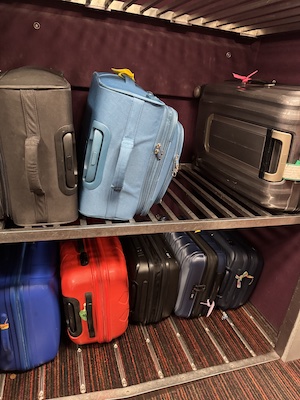
TIP: Riding InterCity trains with large luggage can be difficult due to lack of room for storage and smaller overhead bins – on trains that are not too crowded you may be able to store the luggage around you. If you have large luggage or you are worried about leaving your luggage in the designated storage space near the doors, select seats near the end of the train car so you can keep an eye on them. Also, the steps up into a train car can be very steep making heavy bags a real burden.
TIP: Be careful dragging luggage across cobble stones. Some of the gaps between the stones can be very large and possibly break a luggage wheel. The heavier the suitcase the greater potential for damage.
TIP: Sign up for the Frequent Flyer Club app for your airlines. In addition to receiving updates on your flight, it will allow you to rebook a different flight quickly if yours is cancelled. Also, many airlines assign members of their club to earlier boarding groups than those who are not members. On crowded flights earlier boarding is not only more convenient, it also increases the chance for finding an overhead bin for your luggage.
How to do your Laundry when the controls are not in english
Laundromats in Europe similar to North America except the machine controls are in the local language.
Process:
- Find the general directions. In the picture it is all diagrams — no text. If it is in the local language use a translation app with a camera option to take a picture of the directions so that it will translate it for you.
- Load the machine
- Add money to the central pay station — some require coins, some will take a credit card.
- Select the machine number you are using
- This laundromat provides soap in a cup.
- Go back to your machine and choose the settings desired and the press the start button
Do I need to speak the local language? Need help reading the menu?
Do I need to speak the local language? Generally no. Enough people in the tourist areas of Europe speak English. The farther away from the metropolitan hubs the more likely you are to run into non-English speaking people. Usually they speak enough for you to get by.
TIP: If you get stuck and need to communicate with someone that doesn’t speak your language utilize a translation App like Google Translate. Remember simpler sentences yield better translations and therefore better results. Stick to standard, basic english and avoid buzzwords, slang, or colloquialisms.
TIP: You may find it beneficial to learn a few short key phrases in the local language: please, thank you, excuse me, etc.
TIP: Use the camera option with the translation app to help read menus, signs, product labels, etc.
TIP: Learn to read the local word for EXIT. It will help you leave the station every time you get off a metro or subway train.
Passport, Visa, Vaccines
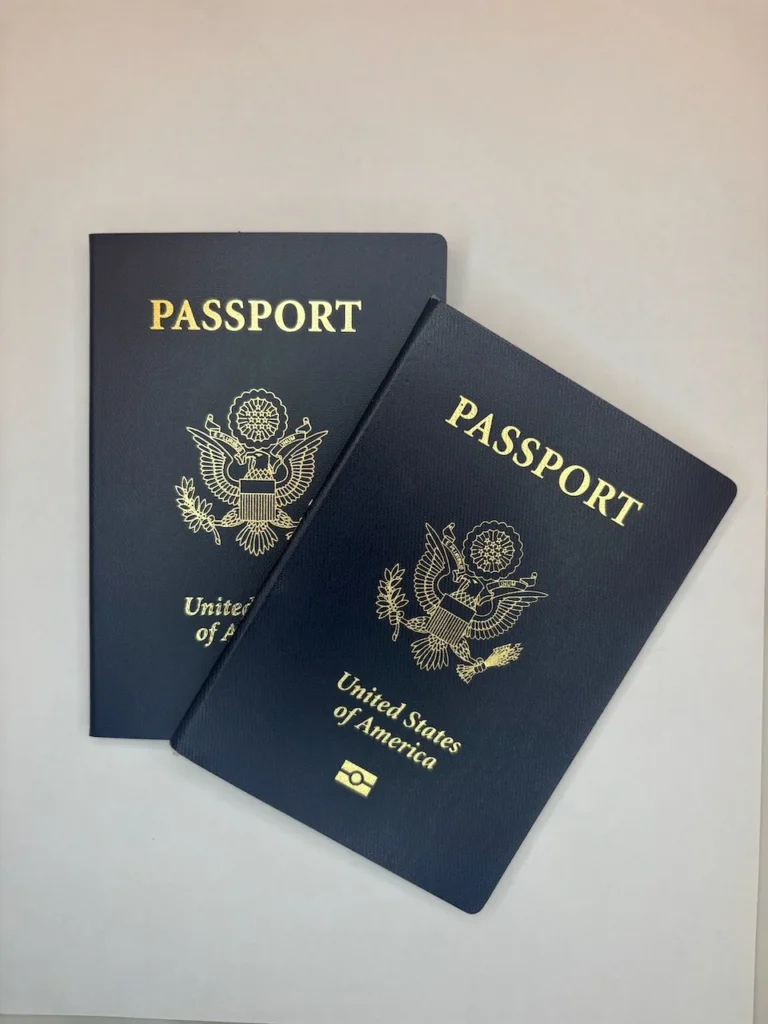
What to know about passports
You can now apply for a renewal online.
TIP: If you are having trouble taking a photo that the Passport website will accept because of the background try taking the photo using portrait mode (or any mode that blurs the background). Step away from the background about 18” or so that the blur effect will be able to separate you from the background.
As you travel, keep a color hard copy of your passport separate from your actual passport so that it doesn’t get stolen – leaving it in your luggage might be a good option. Maintain an electronic version online that you can access while traveling – preferably not stored on your phone in case you lose both your passport and phone. Also leave a color copy with someone at home that can contact the State Department on your behalf if something happens. A copy of your passport will expedite the replacement.
What do I do if I lose my passport while traveling?
First report the loss to the local police and obtain a police report. Then report the loss to the closest embassy. You will have to go to the embassy in person to apply for a temporary travel document. Bring your copy of your passport. NOTE: Once the passport is reported lost or stolen to the embassy even if you subsequently find it you can no longer use it for travel.
Do Americans and Canadians need a Visa for Europe?
No, however in the fourth quarter of 2026, along with a valid passport, it is expected that Canadians and Americans will be required to obtain an ETIAS (European Travel Information and Authorization System) for the Schengen Area plus other countries. This not a visa but rather a pre-screening tool that is obtained by completing an online form and submitting approximately 20 Euros. The approval is good for three years or until your visa expires. A valid passport is required.
TIP: apply in advance for approval to avoid any delays due to the volume of ETIAS requests.
TIP: Schengen member countries plus Switzerland, Iceland, Norway, Lichtenstein, will be implementing ETIAS. Check visa requirements for all other countries before you go (expect this list to be changing dynamically).
Do Americans and Canadians need a Visa for the UK?
No, however along with a valid passport, Americans and Canadians will have to apply for an ETA (Electronic Travel Authorization) prior to leaving for your destination. This applies to Northern Ireland but not Ireland. The difference is that Northern Ireland is part of the UK whereas Ireland, or the Republic of Ireland, is independent.
Vaccine requirements vary from country to country and can change quickly. Check the requirements for each country you expect to visit. The CDC recommends several vaccines such as MMR, Hepatitis A and B etc. Vaccination for tick-borne Encephalitis is advised for anyone traveling to central or eastern Europe that may be exposed during visits to rural or forested areas.