How to Strategically locate your hotel
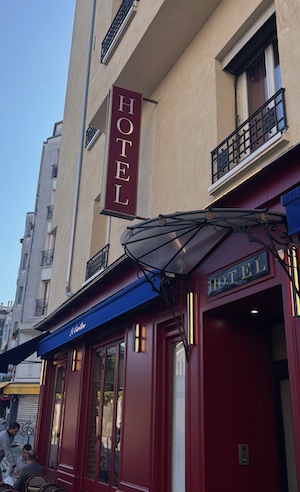
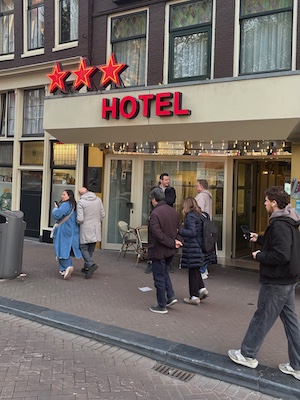
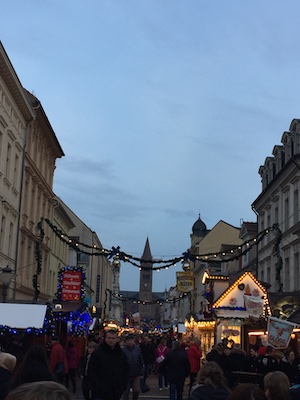
In smaller towns, hotels located within walking distance of the city center or old town is a great choice for being in the middle of the action.
In larger cities, however, that have extensive public transportation systems (trams, streetcars, subway, buses etc.) you may want to consider a hotel that has useful amenities nearby rather than being close to a specific tourist site. Think of Paris: you will probably want to see the Eiffel Tower, the Louvre, Notre Dame, and the Arc de Triomphe. To see these sites and the much more that Paris offers will require a bit of traveling. Nothing extensive but easy access to a Metro station from your hotel will be greatly appreciated after a long day.
- TIP: Your health and safety are paramount do not sacrifice its importance in favor of other criteria or suggestions when selecting a hotel and its surroundings
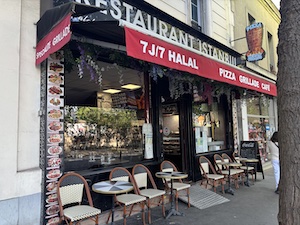
- TIP: In larger cities find a hotel that has a selection of breakfast and coffee places on the way to the train or metro station, a good selection of restaurants nearby for dinner, is close to the transportation (mainly a train station), has a grocery store in the neighborhood, and if you packed lightly, at some point on your trip you might need a laundry close by.
What Amenities your Hotel should have
Having someone on site 24×7 can be very helpful. It’s the kind of resource that is not fully valued until something goes wrong. Also, if you arrive at the hotel before check-in time it may be possible to leave your luggage at the hotel freeing you up to begin exploring the city.
- TIP: Grab a business card from the front desk so that you always have the phone number and address of the hotel. If you lose your phone or your battery dies you will lose all of your information. Having a business card in your pocket will come in very handy.
- TIP: If you do not speak the local language having hotel staff that speak english can make your stay much more enjoyable.
- TIP: If you arrive before check-in and are unable to leave your luggage where you are staying, check the train station to see if they have lockers available. Also, there are several apps and websites that list places to store your suitcases.
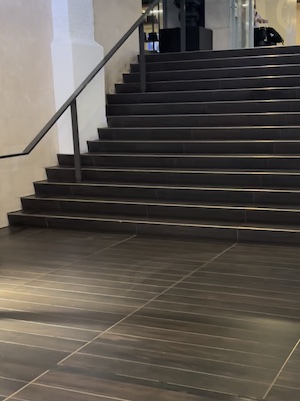
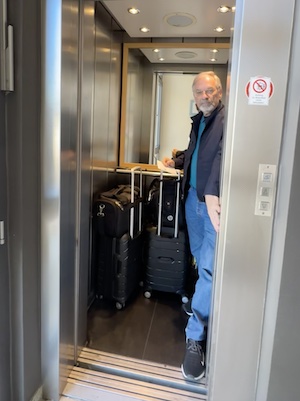
Do I need a hotel with an elevator? Many hotels in Europe are in older buildings and therefore do not have an elevator. You need to determine if this is an issue for you. Because the buildings are older the passage ways and stairwells are more narrow and steeper than in the US. Carrying heavy luggage yourself can be challenging.
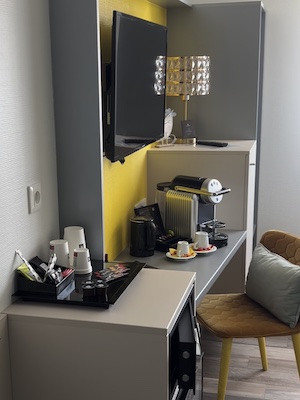
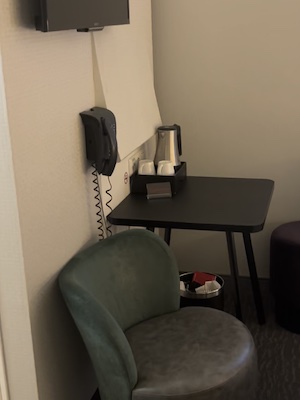
Having a coffee pot or tea pot in the room might be a good consideration.
Your health and safety are paramount do not sacrifice its importance in favor of other criteria or suggestions when selecting a hotel and its surroundings.
Summers in Europe can get quite warm. Air conditioning is not always available. If you want air conditioning be sure to check for it.
Some hotels in Europe that offer a washer/dryer in their rooms are providing a small unit that both washes and dries. Generally these units work on small loads and take a very long time (up to 6-7 hours to dry)
If you plan to use the hotel Wifi make sure to use a VPN application to safeguard your data.
Should I find a hotel that offers breakfast or just pick up something on the way to the first activity? It depends on what you like, how adventurous you are, and how much effort the hotel puts into breakfast. Smaller hotels that offer breakfast tend to offer something that is somewhat limited and repetitive. The flip side of this is that the breakfast is in your hotel, ready for you and you know what to expect, Eating in a hotel might be a bit pricey, however if you look around you can always find more reasonable places that include breakfast. Usually you can opt to pay for breakfast at the hotel on the days you want to eat in.
Will I be comfortable in a boutique hotel or go with a larger chain hotel?
Larger chain hotels generally have larger rooms – similar to what we experience in North America. They may have elevators, night staff, perhaps room service as well.
Standard European hotel rooms are generally much smaller. The floor space around the bed may be large enough to walk around but space for luggage may limited.
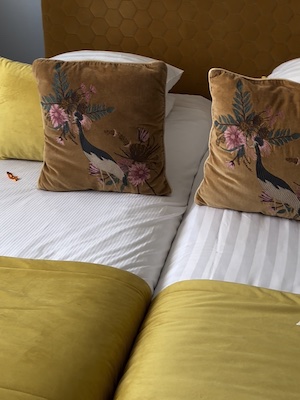
The bathrooms are generally small and the bed sizes are narrower. Standard twin beds in Europe are 35” x 79” whereas in the US they are 38” x 75”. A double room may be two twins pushed together.
How do I determine what my hotel will reallly be like?
The best way to get a sense of a hotel is to read the reviews. Reviews should mainly be read for context to get an impression, looking only for things that matter to you. Also, note whether issues are repeated. Every business will have customers that will not be entirely satisfied and some of them may write negative reviews. Sometimes the issues that are brought up are bit on the bizarre side. Unless it mentions something that is of particular concern to you, the one-off complaints or issues that are trivial to you should be ignored. Pay attention to items that impact you and are repeated. For instance if several reviews indicate significant street noise and you are worried this might be a problem for you then perhaps a different hotel would be a better choice.
- TIP: First check the number of reviews. If a hotel only has a few there won’t be enough information to get a good idea.
- TIP: To really understand whether the hotel is right for you, you need to read lots and lots of reviews.
Not all Hotels have 24x7 attendants. Do I really need one?
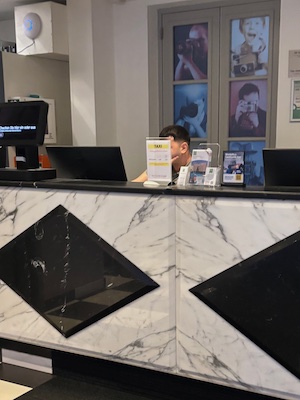
This is a matter of personal preference, however our recommendation is that you only stay in hotels that have 24×7 attendants that speak english.
Why? Because if something goes wrong you want someone onsite that can help you. It may only be a water leak or a clogged toilet that is overflowing, but if you don’t know who to call to get it fixed you will have to live with it until someone comes onsite.
In the case of an emergency, whether medical, fire or police, you want someone that will be able to communicate with you directly and be able to act as an interpreter with the authorities.
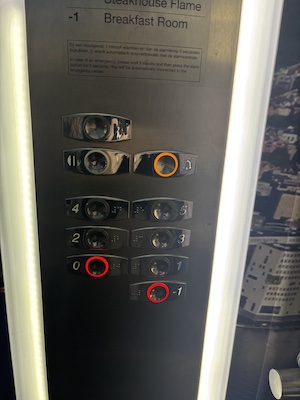
What floor is my room on and why does it matter?
In Europe the first floor is our second floor in North America. If you are thinking you can make it up and down one flight of stairs you might be in for a surprise as you climb to the US equivalent of the third floor.
Because the buildings are older they don’t have a lot of room to add an elevator. It might be a challenge to fit a wheelchair in some of them.
Be aware that we have been in hotels that had an elevator and yet we were still required to climb a few stairs to get to the room. If this would be difficult you should call the hotel directly to make sure there are no steps from the elevator to the room AND that there are no steps leading into the hotel.
Also, the main floor is the “zero” floor as shown in the picture. That means that any floor below will be shown in negative numbers.
Smaller hotels will not have anyone to help you with your luggage.
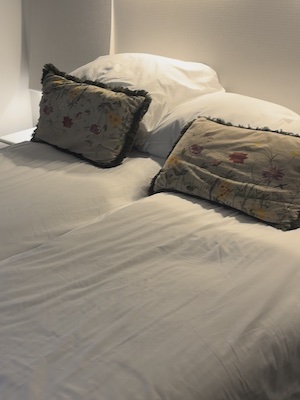
If it says "Queen Bed" will it really be a queen bed?
Larger chain hotels generally have larger rooms – similar to what we experience in North America. Standard European hotel rooms are generally much smaller. The floor space around the bed may be large enough to walk around but space for luggage may limited. The bed sizes are narrower. Standard twin beds in Europe are 35” x 79” whereas in the US they are 38” x 75”. A double room may be two twins pushed together.
If the hotel website suggests they can provide either two twin beds or a queen it might mean they will push the two twin beds together. If it is a concern and the website is unclear you should call to make sure you get what you want.
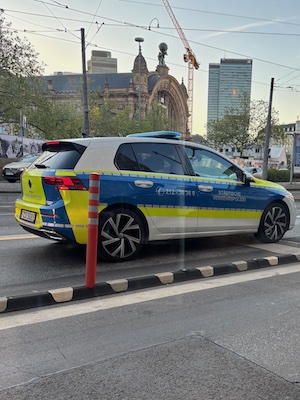
Hotel safety: Inside and Outside
You must make a determination whether the hotel you have selected is safe. Reading reviews may provide some insight. Also, searching the hotel surrounding using google street view may also provide clues. Make certain the streets look safe enough to walk at night. Locating your hotel near the transit mode you will be using, such as a metro station, will reduce the amount of time you are on the street and hopefully reduce your exposure to risk.
Review the State Departments recommendations for Lodging Safety website for useful information.
If you are uncertain it may be worthwhile to search for an alternative place to stay.